
Running a Sex Offender Check in Lehigh County
The Pennsylvania State Police Megan’s Law Public Website is the authoritative statewide search. It covers statutorily designated registrants, Sexually Violent Predators, and certain people registered under Pennsylvania’s separate pre-SORNA framework. The publication is for public safety. It does not combine every police report, arrest, court event, or out-of-state record.
Choose the search mode that fits the question. A name search works for a known person. County, municipality, ZIP, address, radius, and map routes help with neighborhood awareness when the interface offers them. Select Lehigh County, then review the current profile rather than relying on a search-engine snippet or saved image.
The official PSP registry search is shown below.
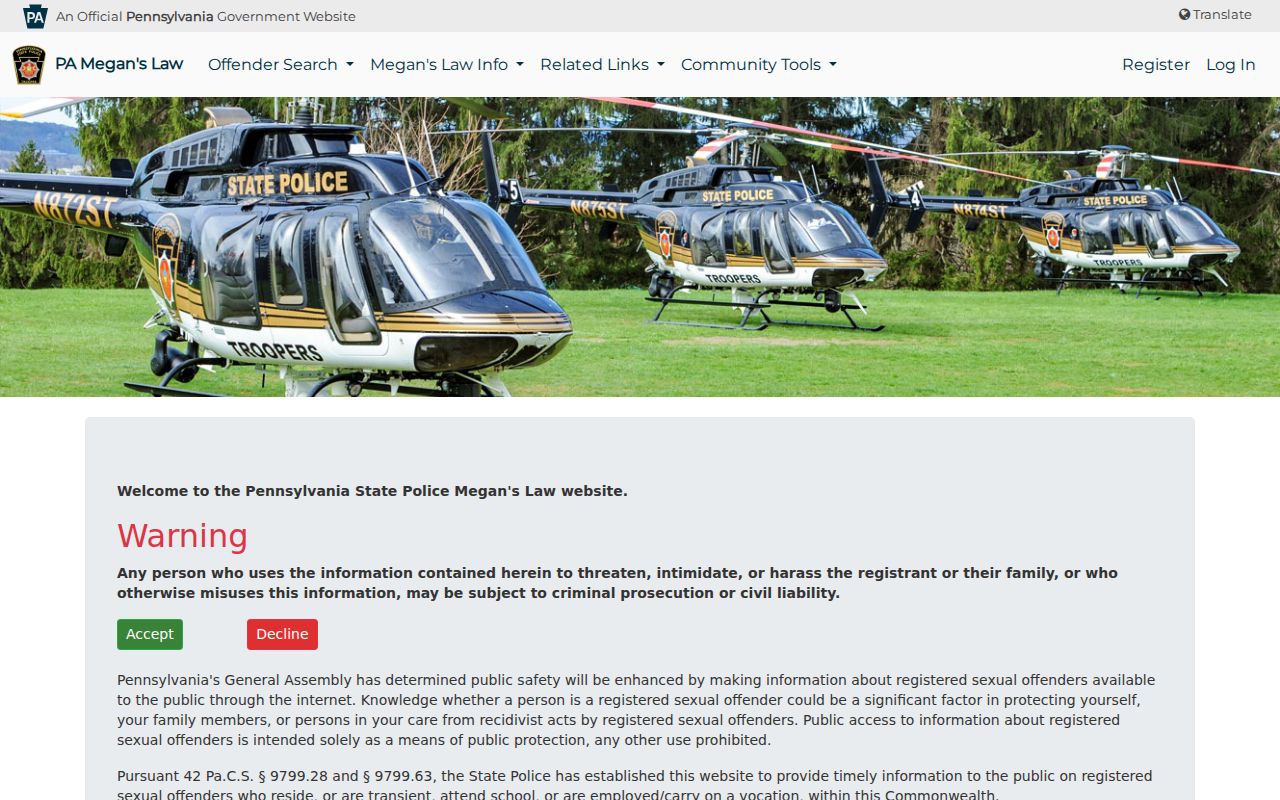
Its live terms, notices, and profile dates provide context that a copied result can lose.
Lehigh County Registry Is Not History
A registry profile has a narrow statutory purpose. It identifies information Pennsylvania law authorizes PSP to publish about registered offenders. A PATCH certificate, police report, and court docket are separate products. A person can have a criminal history without appearing on the registry, and a registry classification does not summarize every part of a person’s record.
Tier describes statutory registration duties. It is not a score of current dangerousness. The underlying offense, conviction jurisdiction, registration status, and verification information should be read as displayed. Never infer the identity of a victim or use the profile to make claims that the official data does not support.
Note: A Lehigh County registry result answers a public-safety search, not a general question about every arrest or conviction.
Searching the Pennsylvania Megan’s Law Public Website
Accept the site notices and select a search method. Enter only the facts known, then expand carefully if the first query is too narrow. A municipality search can help around Allentown or Emmaus. Bethlehem requires special care because the city crosses Lehigh and Northampton Counties. A county-only filter may omit a relevant city result on the other side of that line.
- Open the official PSP Megan’s Law website and review its terms and safety notice.
- Choose name, county, municipality, ZIP, address, radius, or map search as offered.
- Select Lehigh County or enter the location, keeping Bethlehem’s county boundary in mind.
- Open the current official profile and check status, address context, offense, and verification details.
- Use PSP’s contact or local law-enforcement route for a possible error or compliance concern.
| Field or control | Requirement | Use |
|---|---|---|
| Search type | Required | Name, place, address, or map route as available |
| Last name | Conditional | Primary name-search field |
| First name | Optional or conditional | Narrows a common surname |
| County | Optional | Select Lehigh for county results |
| City or municipality | Optional | Local place search |
| ZIP or address radius | Optional | Neighborhood and proximity search |
Fresh Lehigh County Registry Results
Registry information changes when PSP processes a new address, vehicle, school, employment, online identifier, verification, or compliance status. A cached result may no longer be current. Run a new official search whenever location and date matter. Compare the profile’s own status and verification information rather than treating an older screenshot as a live government statement.
The official registry FAQ appears in this source capture.
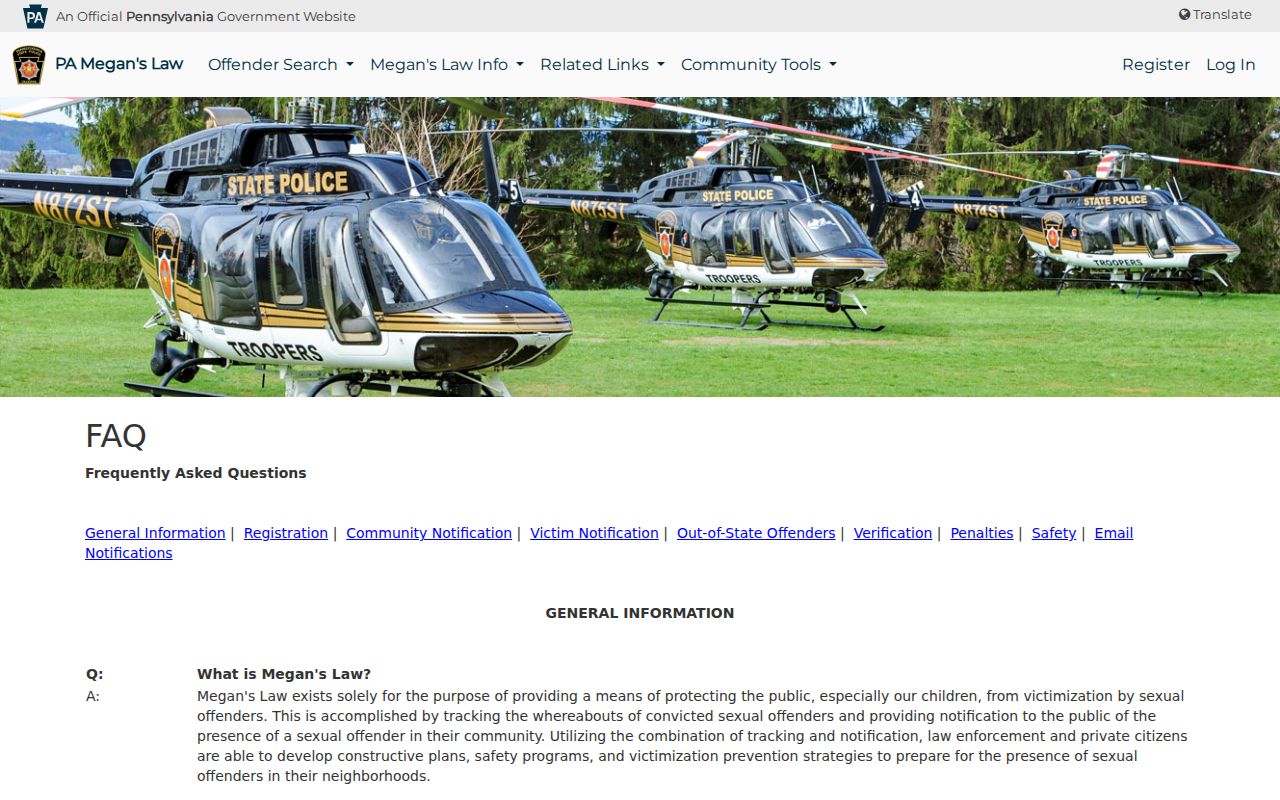
Its cautions help readers interpret listings without turning them into claims about conduct that has not occurred.
If an address looks wrong, do not visit or confront anyone. Use the official correction or contact route and provide the specific profile fact at issue. Call 911 for an immediate threat.
What a Registry Profile Shows
A public profile can include a photograph, name and aliases, physical descriptors, registration classification, status, and verification information. Pennsylvania may publish residential detail, offense and conviction facts, vehicles, school or work information, online aliases, and scars, marks, or tattoos where the statute authorizes it. Mapping, printable profile, and caution links may also appear.
| Identity | Name, aliases, photograph, age or birth detail, and physical descriptors as law permits. |
|---|---|
| Registration | Tier or classification, current status, verification facts, and noncompliant or absconded indicator if shown. |
| Location | Residence, municipality, address, or mapping detail as legally published. |
| Offense | Description, statute, conviction jurisdiction and date, and sentence-related facts when displayed. |
| Other Public Fields | Vehicles, school or work information, online aliases, and identifying marks where authorized. |
| Not Published | Victim identities are not registry profile fields and must not be inferred. |
A profile should be read as a current statutory publication, not as a complete Lehigh County court file. A Lehigh County registry check should always return to the live PSP source for current verification.
Lehigh County Registry Profile Context
The offense row identifies a statute and conviction jurisdiction, but it does not retell the full court case. A sentence-related field also should not be treated as a current custody or parole result. Use the court docket for disposition detail, PA DOC for covered state custody or parole, and the registry for the public-safety facts PSP publishes.
Physical descriptors and identifying marks can distinguish people with similar names. They do not justify guessing about someone who is not listed. Address and municipality fields reflect the legally published location when PSP processed the update. Compare live verification and status information before relying on location context.
Lehigh County Registry Across Bethlehem
Bethlehem spans Lehigh and Northampton Counties. A search restricted to Lehigh County can therefore miss a Bethlehem location that lies across the county line. Use city, address-radius, map, or a second county search as the live interface allows. This local geography is one reason a municipality name should not be treated as proof of county jurisdiction.
The same principle applies to a move beyond Pennsylvania. PSP is the authoritative source for Pennsylvania, but another state maintains its own registry. A national official search can route across those jurisdiction lines.
Registration Requirements and Levels in Pennsylvania
Pennsylvania ties duties to the qualifying offense and statutory classification. Tier I generally lasts 15 years with annual in-person verification. Tier II generally lasts 25 years with semiannual verification. Tier III generally lasts for life with quarterly verification. A judicial Sexually Violent Predator classification also carries lifetime and quarterly duties, plus its own provisions.
The PSP registration page supplies the offense-specific framework.
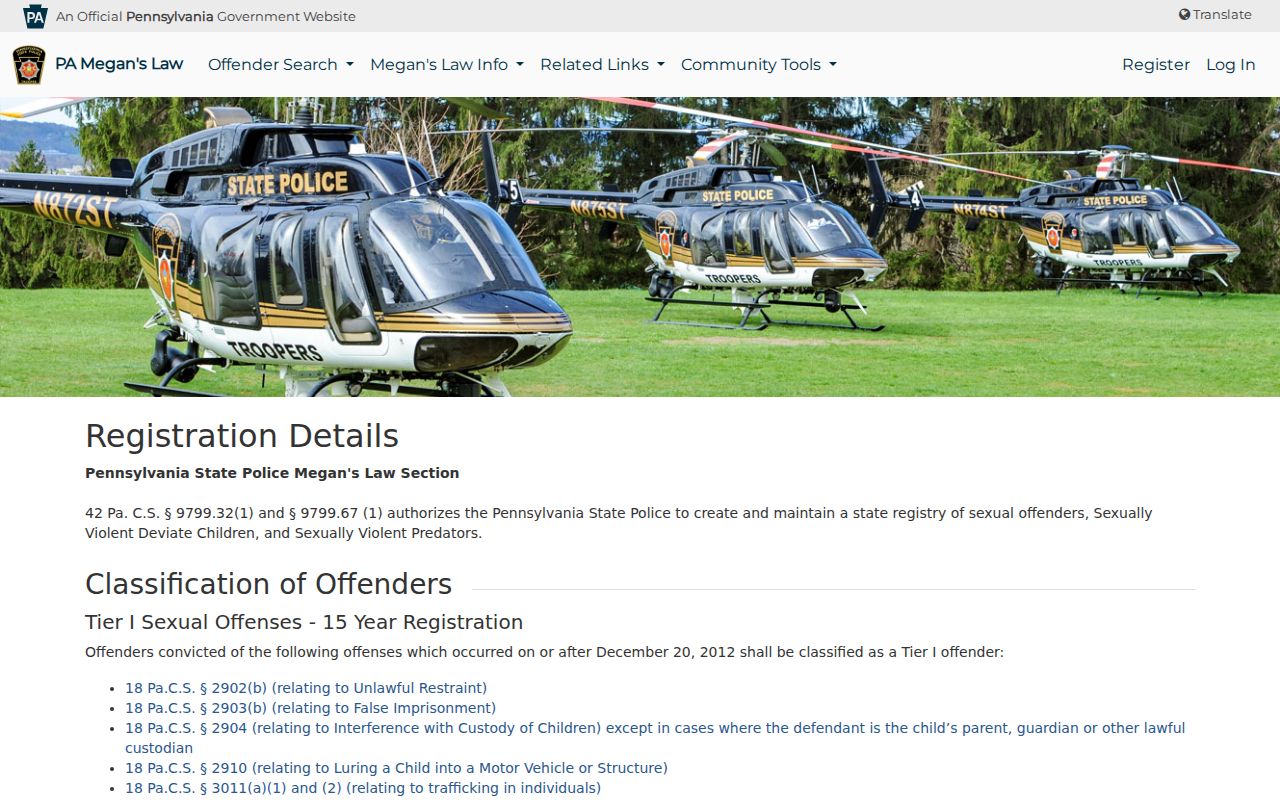
The source shows why one broad statement cannot replace the offense-by-offense rules.
| Classification | General duration | Verification |
|---|---|---|
| Tier I | 15 years | Annual in person |
| Tier II | 25 years | Semiannual |
| Tier III | Lifetime | Quarterly |
| Sexually Violent Predator | Lifetime | Quarterly, with added provisions |
Tolling, offense-specific rules, and statutory changes can affect an individual duty. Tier III and SVP are related legal labels but are not interchangeable.
Lehigh County Registry Change Reporting
Registrants must report specified changes, often in person within three business days. Depending on the statutory duty, those changes can include residence, employment or education, vehicles, and online identifiers. The public profile may change after PSP processes an update. Verification schedules are separate from event-driven change reporting.
Readers should not calculate compliance from an old capture or an assumed move date. Check the live status. A suspected registration violation belongs with PSP or local law enforcement. The correct response is a factual report, not contact with the listed person.
Lehigh County SVP and Tier Records
Tier III generally means lifetime registration with quarterly verification based on a qualifying offense. Sexually Violent Predator is a judicially determined classification with lifetime, quarterly, and added counseling provisions. The labels can overlap in duration, but they arise from different legal findings and should not be used as synonyms.
The same care applies to Tier I and Tier II. Their general 15-year and 25-year periods can be affected by offense-specific rules, tolling, and statutory changes. The PSP registration page provides the controlling lists. A short table is an orientation tool, not a calculation of one person’s legal end date.
NSOPW Beyond Lehigh County
The U.S. Department of Justice’s National Sex Offender Public Website federates searches across participating jurisdictions. It is useful when an address, move, or personal safety concern extends beyond Pennsylvania. PSP remains the source for the Pennsylvania profile, while NSOPW adds a cross-state layer.
The national official search appears below.
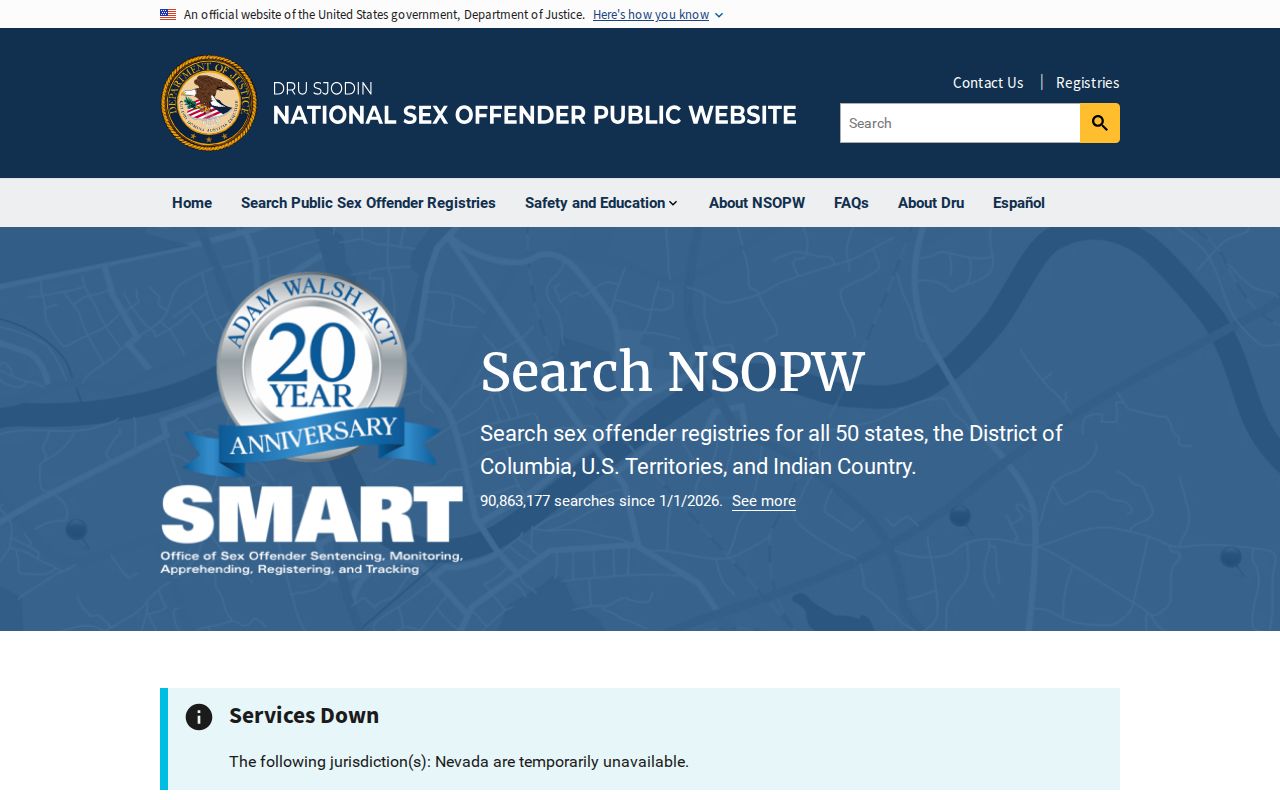
Open the source-jurisdiction profile from a result and review its current notices because states publish different fields.
A national no-result should not be treated as a universal clearance. Participation, search matching, statutory coverage, and update timing can vary.
For a Lehigh County location near another county or state, search both sides of the boundary and inspect the source jurisdiction shown on each result. A Lehigh County name match can also require aliases and physical descriptors to distinguish people. Keep the search tied to a current safety question and the live government profile. The Lehigh County municipality, ZIP, and radius tools provide place context, while the offense and verification fields supply legal context. Neither layer should be read alone.
Lawful Use and Community Notification
Registry information supports family and community awareness. Use it to understand the official facts, plan sensible safety steps, and report a possible error or noncompliance through lawful channels. Do not threaten, intimidate, harass, discriminate against, or confront a listed person. Pennsylvania law penalizes misuse of registry information.
The official Pennsylvania Judicial Code contains the governing Megan’s Law provisions, including PSP publication authority in 42 Pa.C.S. §§ 9799.32(1) and 9799.67(1).
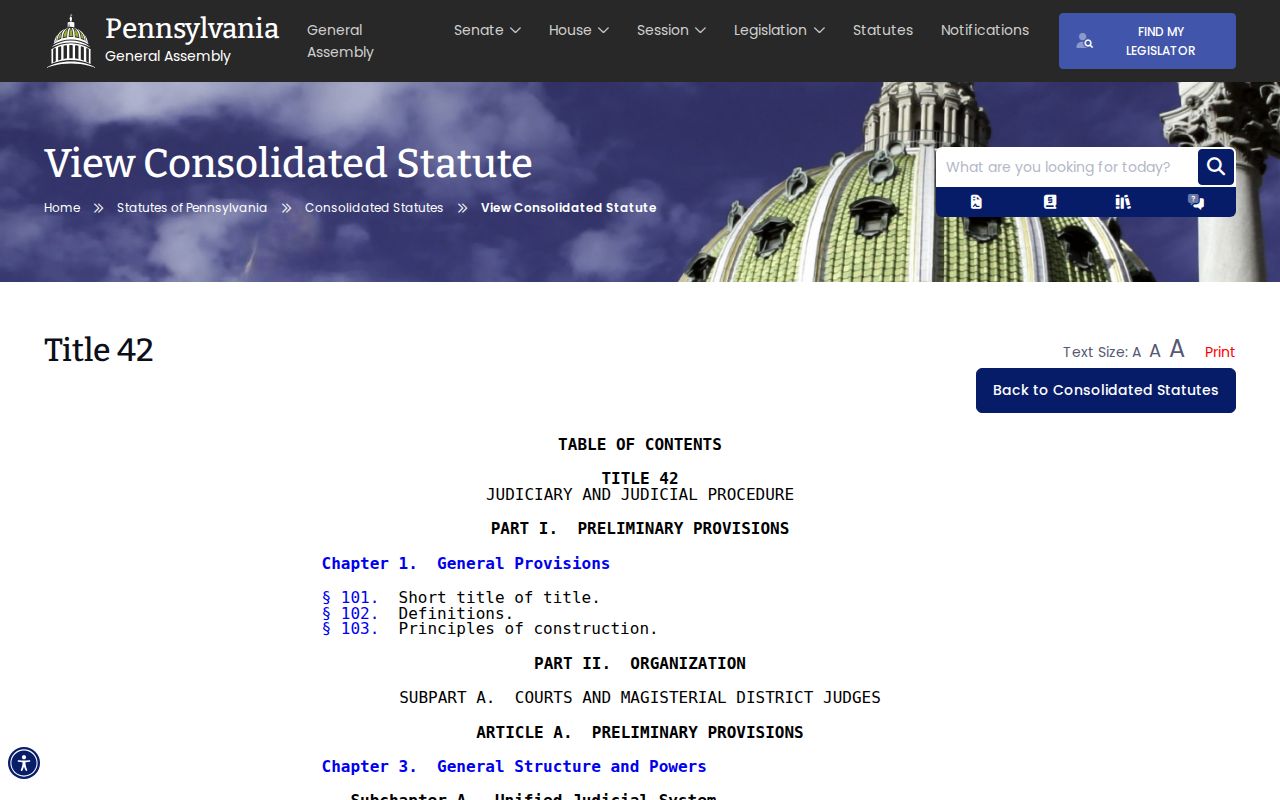
Those provisions frame the registry as a controlled public-safety publication rather than an invitation to take action against anyone.
Misuse warning: Pennsylvania law forbids using registry information to threaten, intimidate, or harass. Never confront a listed person; report concerns to PSP or local police.
Parole status is also separate from registry status. The PA DOC parole page is the source shown below.
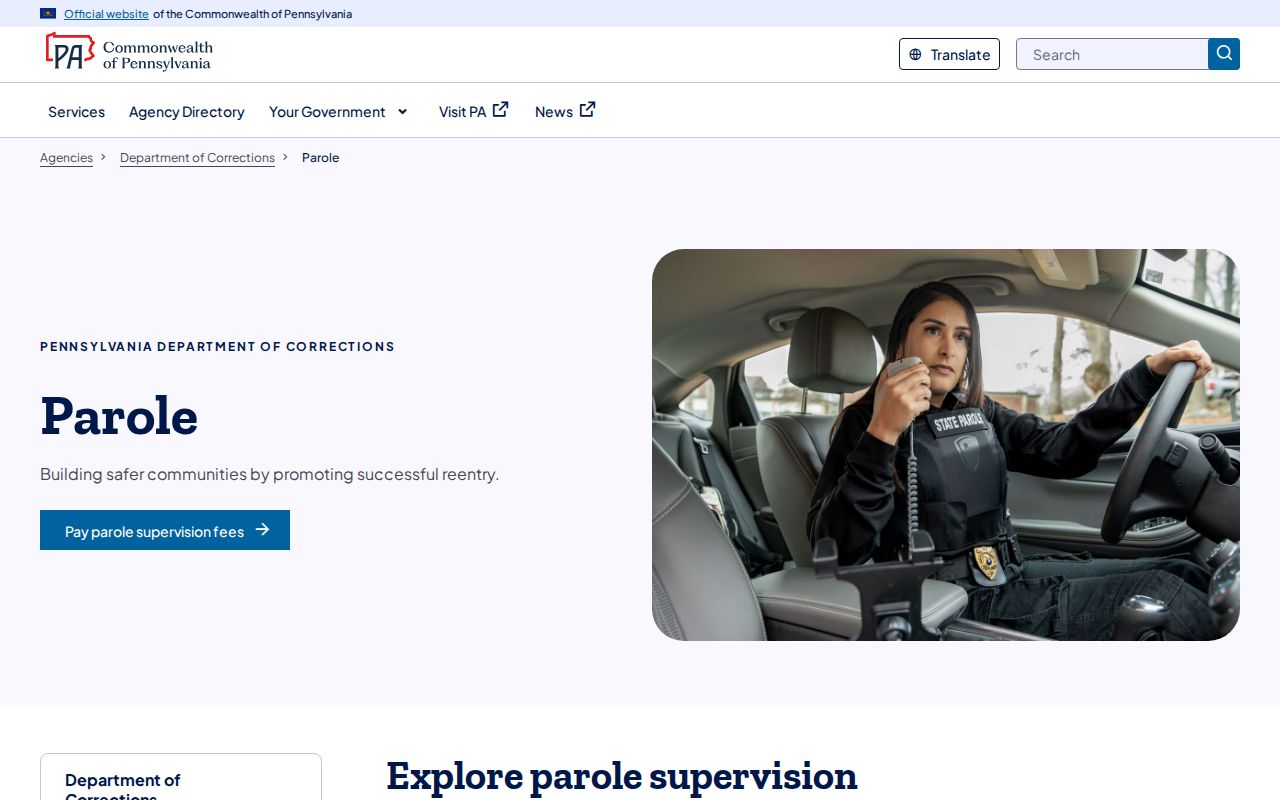
A registry profile does not prove that a person is on parole, and a parole record does not replace the Megan’s Law search.