
How to Check Criminal History in Bethlehem
A Bethlehem search works best when each source has a clear job. The Police Department keeps the source report and incident details. Pennsylvania Magisterial District Courts handle summary matters and the first stages of more serious charges. A case held for court moves to the Court of Common Pleas for the county with jurisdiction. The Pennsylvania State Police then maintains the statewide criminal-history repository. No single result replaces all four.
Use the most exact Bethlehem identifier available. A name can return the wrong person, while a Bethlehem incident number or Offense Tracking Number, called an OTN, can connect police paperwork to a court docket. Follow this order:
- Begin at the Bethlehem Police Department for the official police channel and current records instructions.
- Ask for the eligible incident or police record, using the incident number, date, location, and requested format when known.
- Search the Unified Judicial System portal by participant, OTN, or police complaint number and inspect the county in each result.
- For a Lehigh-side case, use Lehigh County court or jail channels; route a Northampton-side matter to that county instead.
- Use PATCH only when a Pennsylvania repository certificate is the record needed, not as a substitute for the police report or full docket.
This sequence keeps a Bethlehem event from being forced into the wrong county. For broader Lehigh sources and their roles, the Lehigh County criminal history overview provides the county-level route.
Which County Holds a Bethlehem Case?
A Bethlehem mailing address does not prove that Lehigh County holds the court file. Bethlehem crosses the Lehigh and Northampton county line, while criminal jurisdiction follows the offense and the court handling it. This is the key Bethlehem records trap. Someone searching only Lehigh may find no result even though a valid Bethlehem docket sits in Northampton County.
Check the county field on the UJS result rather than making an assumption from the Bethlehem name. Bethlehem Police paperwork may also supply the OTN, complaint number, arresting agency, and Magisterial District Court. Together, those facts identify the right court path. If a Bethlehem search begins with only a name, narrow it with the case date and other public identifiers before treating a result as a match.
Note: Bethlehem identifies the city agency, while the docket identifies the county court that owns the filed case.
The Bethlehem Police Department
Bethlehem Police creates the local incident and arrest records for events handled by its officers. Those source records can include the complaint number, event date, place, alleged offense, and participant roles, subject to release limits. The police file is distinct from the later court docket. It may contain an incident narrative that will never appear in a PATCH certificate, while investigative, juvenile, victim-sensitive, or security-related details may be withheld or redacted.
The official Bethlehem Police portal shows the current department and its service routes. The research crawl did not expose a stable set of Bethlehem records-counter hours, contact numbers, form labels, eligibility rules, or fees. Those values can change and should be read from the live Bethlehem Police Records page before a request is sent. A requester should not borrow fees or procedures from Allentown, Emmaus, or Lehigh County because each government controls its own records.
The official Bethlehem Police source also supplied a view of the department for this record search.
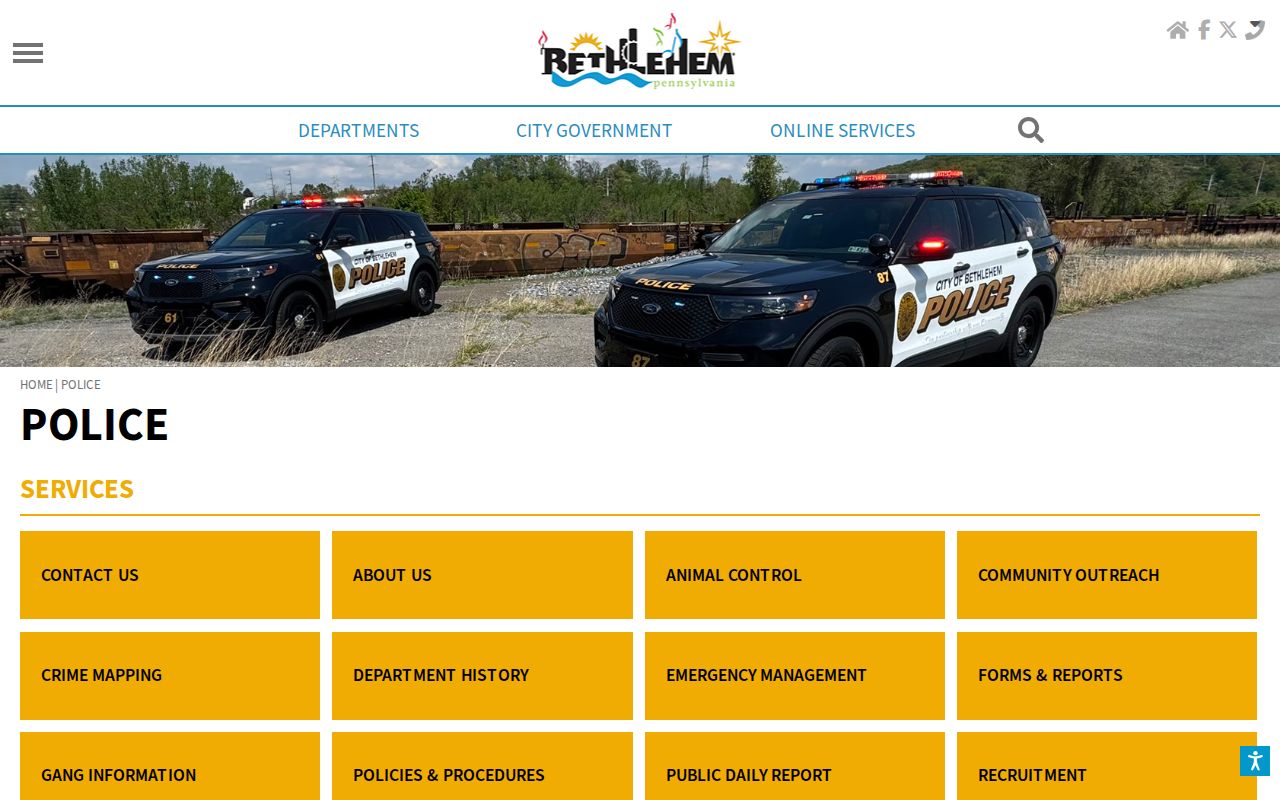
The department image marks the city-level starting point, not the county courthouse or the state criminal-history repository.
Bethlehem Police Records Versus Court Records
Bethlehem police and court records overlap, but they are not duplicates. Bethlehem Police documents the call, response, investigation, and arrest. The court creates a Bethlehem docket when a complaint is filed. That docket can show the county, court type, charges, bail, hearings, counsel, disposition, sentence, and costs. A later dismissal or withdrawn charge may be visible on the Bethlehem docket even though the first police report still describes the initial allegation.
This comparison helps readers choose the right source before making a request:
| Source | Best For | Key Limit |
|---|---|---|
| Bethlehem Police | Incident and arrest source records | Restricted material may be withheld |
| UJS court docket | Charges, county, events, and outcome | Not every filed document is downloadable |
| PATCH | Pennsylvania repository certificate | Not a police narrative or full case file |
When Bethlehem records disagree, compare identifiers instead of choosing the source with the most detail. The OTN and docket number can show whether two Bethlehem entries concern the same case.
Arrests and Bookings in Bethlehem
A Bethlehem arrest begins with a city police record, but custody depends on where the matter belongs. People held for Lehigh-side cases may enter Lehigh County Jail. Northampton-side matters may use Northampton County systems. Bethlehem does not make every city arrest a Lehigh booking, and no verified public Lehigh County inmate roster was found in the official sources reviewed.
For a recent Lehigh-side Bethlehem arrest, contact the arresting agency and the proper county facility, then check UJS for the filed Bethlehem complaint, bail, and hearing. The PA DOC Inmate/Parolee Locator is not a Bethlehem booking log. It covers state-sentenced people and state-supervised parolees, so a blank DOC result says nothing certain about current county-jail custody. A person can also be released before a Bethlehem docket becomes easy to locate.
Note: An arrest is an accusation, and only the later court disposition shows whether the charge ended in a conviction.
Searching Bethlehem Criminal Dockets in UJS
The Unified Judicial System Case Search is the strongest public tool for resolving Bethlehem’s county split. It covers public Common Pleas and Magisterial District Court dockets across Pennsylvania without an account. Select the court type that fits the case, search with the best known identifier, and read the county on the result. Do not set Lehigh as a filter until the source record supports that choice.
The UJS controls documented for a Bethlehem record search include:
| Field | Use in Bethlehem | Search Note |
|---|---|---|
| Search Type | Choose docket, participant, OTN, or complaint number | Use the most exact mode available |
| Court Type | Choose Magisterial District or Common Pleas | The case stage controls the court |
| County | Confirm Lehigh or Northampton | Do not infer from “Bethlehem” alone |
| Participant Name | Find a case when no number is known | First and middle names narrow common results |
| OTN | Trace one criminal matter | Often the best county-line key |
| Police Incident Number | Connect city paperwork to a docket | Enter it when the police record supplies it |
A public Bethlehem docket can list the case status, charges, grading, bail, hearings, entries, disposition, sentence, and financial assessments. Sealed and limited-access Bethlehem matters will not appear in public results.
Bethlehem Municipal Court Records
Bethlehem has no separate general-jurisdiction municipal criminal court. Pennsylvania Magisterial District Courts hear summary cases and preliminary stages, while a felony or misdemeanor held for court moves to the appropriate county Court of Common Pleas. Calling all of these “Bethlehem municipal court records” can send a requester to an office that does not hold the file.
The correct Bethlehem court record depends on both stage and county:
| Court Name | Pennsylvania Magisterial District Court or the correct county Court of Common Pleas |
|---|---|
| Case Types Heard | Summary matters and preliminary proceedings at the MDJ level; held-for-court criminal cases at Common Pleas |
| Case Lookup Channel | Free UJS Web Portal search by participant, OTN, complaint number, or docket number |
| What the Docket Shows | County, charges, status, bail, scheduled events, docket entries, disposition, and sentence when public |
| Copies & Fees | Ask the clerk shown on the docket and confirm that office’s current copy rules and charges |
Once the docket confirms Lehigh County, the full county case route belongs with the Lehigh County criminal court records. A Northampton result must stay with Northampton’s clerk.
Bethlehem OTN Record Trail
The OTN is Pennsylvania’s Offense Tracking Number. It follows a Bethlehem criminal matter from police processing into the court system and helps the state repository connect later events. In Bethlehem, it has added value because it can reveal the correct Bethlehem docket without assuming a county. Search the exact OTN in UJS, open the matching Bethlehem result, then verify the county, court type, complaint number, and participant.
If an expected Bethlehem docket is missing, check the number for transcription errors and try the Bethlehem police complaint number or participant search. New filings can also take time to appear. Once found, save the docket number for any Bethlehem clerk request. Do not use name alone to merge records, especially where two people share similar names or birth details.
Where Bethlehem Records End Up
Bethlehem Police retains its own source reports. A filed complaint moves through a Magisterial District Court, then may reach the Court of Common Pleas in Lehigh or Northampton County. Courts report dispositions to the Pennsylvania State Police Central Repository. The county split changes the middle of that path, while PSP remains the statewide endpoint for reportable criminal-history data.
Record flow: Bethlehem Police › Lehigh or Northampton County Courts › Pennsylvania State Police Central Repository
This Bethlehem record flow also explains timing gaps. The newest incident may exist only at Bethlehem Police. A filed Bethlehem case may appear in UJS before a final outcome reaches PSP. PATCH is a repository product, not proof that the Bethlehem police narrative or every court paper has been checked. Compare sources when a complete sequence matters.
Bethlehem Custody Record Choices
Three custody settings are easy to confuse. Police custody is the short first stage around arrest and processing. A county jail holds people under the county system, which may be Lehigh or Northampton for a Bethlehem matter. PA DOC custody begins after a state sentence or covers state parole supervision. The Lehigh County Community Corrections Center in Bethlehem is a county work-release and community corrections site, not a public substitute for the jail or clerk.
Use the Bethlehem docket and custody agency together. For a Lehigh-side Bethlehem case with no public roster, the verified chain is Bethlehem Police, Lehigh County Corrections, and UJS. For state custody, use the PA DOC locator. If the Bethlehem docket names Northampton County, switch county systems. A missing result in one database does not prove that no Bethlehem custody record exists in another.
Public Access Rules
Public access depends on the type of Bethlehem record. The Pennsylvania Right-to-Know Law can reach qualifying city agency records, but it does not override criminal-history controls, sealed orders, juvenile protections, victim privacy, or active investigative exemptions. Court case records follow judicial access rules and the clerk’s process. Police audio and video use Pennsylvania Act 22 procedures rather than an ordinary RTKL request.
Bethlehem’s citywide Right-to-Know route is the fallback for a nonroutine Bethlehem record. Describe an existing Bethlehem record with care, name a date range, and ask for a format. Bethlehem does not have to create a new list or answer broad questions. Investigative content can still be withheld even when basic Bethlehem incident facts are public.
Key Statutes:
Pennsylvania Right-to-Know Law gives agencies five business days for the initial response to a written request.
18 Pa.C.S. Chapter 91 defines and controls the dissemination of criminal history record information.
UJS Public Records Policies govern access to Pennsylvania judicial and case records outside the ordinary city RTKL route.
Bethlehem Criminal Records Geography
Bethlehem’s Moravian roots and Bethlehem Steel legacy shaped one city on both banks of a county boundary. Modern police work is citywide, but the older Lehigh and Northampton court structures still control where cases are filed. That history is why one Bethlehem agency can feed two county court systems.
The U.S. Census Bureau’s city comparison shows Bethlehem as one citywide place, not a Lehigh-only population.
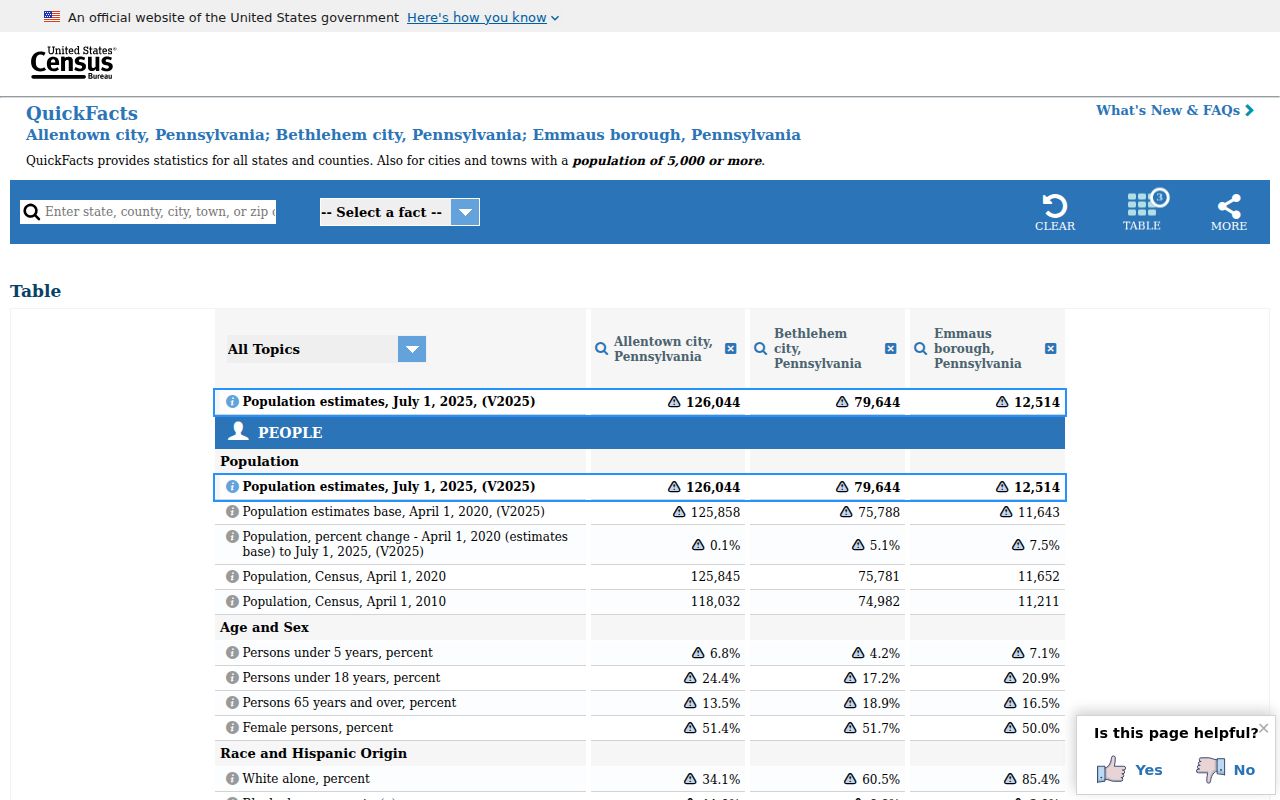
That Bethlehem citywide lens is useful for population context, but Bethlehem court and custody searches must still separate the two counties. PA UCR statistics filtered to Bethlehem Police likewise describe Bethlehem’s citywide activity and should not be labeled as a Lehigh-only court caseload.