
Criminal Cases in the Lehigh County Courts
Pennsylvania criminal complaints usually begin before a Magisterial District Judge. Summary cases can end there. Felony and misdemeanor charges may proceed through preliminary arraignment and a preliminary hearing, then transfer to Lehigh County’s Court of Common Pleas in the 31st Judicial District. The Clerk of Judicial Records Criminal Division dockets Common Pleas filings, judgments, sentences, bail, and related financial activity.
The public file is not a police investigation. It records what parties filed and what the court ordered. A charge on the complaint can be withdrawn, dismissed, amended, or resolved through a plea or trial. Read each count’s disposition and the final status. The county courthouse at 455 W. Hamilton Street in Allentown is the counter for certified Common Pleas records.
Lehigh County UJS Search Routes
The free UJS Web Portal Case Search publishes Common Pleas and Magisterial District docket sheets without an account. Its official docket-sheet guide explains the public sections. Select the right court type and Lehigh County. A docket number is the most precise key. Participant name works when no identifier is known, but common names call for date and case-detail checks. OTN, organization, police incident or complaint number, and SID routes can join paperwork from different stages.
| Field | Use | Verification point |
|---|---|---|
| Docket number | Open a known case | MDJ or CP format and county |
| Participant name | Find an unknown docket | Middle name, filing date, and charge facts |
| OTN | Link an arrest cycle | Related MDJ and Common Pleas entries |
| Complaint number | Match police paperwork | Agency format and incident date |
| Filed-date range | Reduce broad results | Filing may follow arrest |
PAeDocket offers a free mobile court-search route. It is a judiciary app, not a sheriff booking or warrant tool.
How to Search Case Records
Begin at UJS and choose the court level that fits the known stage. If the complaint is recent, search the Magisterial District docket. If charges were held for court, look for the Common Pleas record. Use the county printed on the result, not only the city name. Bethlehem spans Lehigh and Northampton Counties, so a Bethlehem address cannot resolve jurisdiction on its own.
- Select Court of Common Pleas or Magisterial District Court and choose Lehigh County.
- Enter the docket number, OTN, complaint number, or a carefully narrowed participant name.
- Open the docket and compare the caption, filing date, originating court, and identifiers.
- Read every charge row and its disposition instead of treating the filing as a conviction.
- Contact the Lehigh County Criminal Division for a certified copy or public paper that is not online.
A person reviewing an arrest should also compare the later outcome in the Lehigh County arrest history channels. That contextual link should not replace the court docket itself.
Read Lehigh County Case Numbers
Three identifiers often appear together. The police complaint or incident number begins with the arresting agency. The OTN follows the offense cycle into the Pennsylvania court and repository systems. The CP docket identifies the Common Pleas file after a case is held for court. One identifier may lead to related entries, but none should be assumed to represent every charge or every defendant with a similar name.
- MDJ docket
- The preliminary-level file for a complaint, summary matter, arraignment, or preliminary hearing.
- OTN
- The Offense Tracking Number used to connect stages of a criminal matter.
- CP docket
- The Common Pleas case number for a matter held for formal county court proceedings.
- Caption
- The case name, usually identifying the Commonwealth and the docketed defendant.
Cross-check the related-case history rather than guessing that a similar OTN or name belongs to the same event.
What the Case File Shows
A Lehigh County criminal docket begins with court and case identifiers. It may then show participants and counsel, the prosecutor, charge counts, statutory subsections, offense grades, bail, events, filings, financial assessments, and sentence detail. Sensitive identifiers are limited by public-access policy. Sealed, juvenile, and limited-access material stays out of public results.
| Case Header | Court, county, docket number, caption, status, filing date, judge, and originating MDJ. |
|---|---|
| Charges | Count, statute, subsection, description, grade, disposition, and disposition date. |
| Bail | Type, percentage or amount, posting, conditions, status, and forfeiture events when public. |
| Events and Filings | Hearings, continuances, motions, orders, pleas, trials, and judgment entries. |
| Financial Detail | Fines, costs, restitution assessments, adjustments, payments, and balance. |
| Sentence | Confinement, probation, intermediate punishment, and concurrent or consecutive detail as entered. |
A listed filing does not mean its PDF is free or public online. The clerk can identify whether an underlying paper is available.
Lehigh County Certified Court Copies
The Criminal Division at the Lehigh County Courthouse supplies certified records and public documents unavailable through UJS. The 2026 Criminal Division fee schedule lists certification at $12.75. Photocopies made at the clerk’s convenience cost $0.50 per page. Mailed paper or electronic copies cost $1 per page plus a $3 service charge, and microfilm copies cost $1 per page.
Those copy charges differ from filing fees. A summary appeal is listed at $71, while an appellate filing is $73.50 plus the separate appellate-court payment shown on the schedule. A person who only wants to view a public docket should not mistake those filing amounts for a search charge.
| Clerk service | 2026 amount |
|---|---|
| Certification | $12.75 |
| Counter photocopy | $0.50 per page |
| Mailed paper or electronic copy | $1 per page plus $3 service |
| Microfilm copy | $1 per page |
Lehigh County Docket Money Fields
Fines, court costs, restitution assessments, payments, adjustments, and unpaid balances appear as separate entries. They should not be collapsed into one number. A sentence can impose a fine while court costs arise from a different authority, and restitution identifies a separate obligation. Payment-plan activity may continue after disposition.
Read the judgment and sentence with the financial screen. A balance does not state whether a person was convicted on every original count. For a certified accounting or a question about how a payment was posted, use the Lehigh County Criminal Division rather than interpreting a portal snapshot.
Restitution, fines, and costs may also have different recipients and enforcement rules. The public docket shows entered figures, not a full explanation of every calculation. Keep the docket number ready when asking the clerk about a certified ledger or payment entry.
Stages of a Criminal Case
A filed Lehigh County case has a sequence, though not every matter reaches every step. The complaint first appears at the Magisterial District level. Preliminary arraignment addresses bail and the next hearing. At a preliminary hearing, charges may be dismissed, changed, waived, or held for court. Common Pleas then receives the formal case, pretrial motions, pleas, or trial activity.
Case flow: Charges Filed › Arraignment › Pretrial › Plea or Trial › Disposition › Sentencing.
ARD or another diversion path can produce a nonconviction result and may later support expungement, but admission is discretionary. A disposition must be read from the actual docket. Sentencing can include confinement, probation, costs, restitution, or other components.
Note: A charge at the first stage is an allegation, and the final docket determines whether it ended in dismissal, acquittal, plea, or conviction.
Lehigh County bail fields also change as a case moves. A Lehigh County docket may record the type, percentage or amount, posting event, conditions, status, and forfeiture action. Bail is a release decision, not a disposition of guilt. When the Magisterial District and Common Pleas sheets both contain bail data, compare the dates and court level. A later Lehigh County order can replace an earlier entry. The court record, not a copied result page, controls the current terms.
Lehigh County Criminal Search Trap
Lehigh County’s online records and Odyssey materials prominently address property, judgment, and other county records. They should not be presented as the main public criminal docket. The verified statewide source for public criminal case sheets is the UJS Web Portal.
This distinction saves time at the courthouse. Search UJS first, then take the docket number and exact document request to the Criminal Division. An older file or a listed paper without a PDF may still require counter or mail service. Judicial records follow court rules and public-access policy, not the county Law Department’s ordinary RTKL workflow.
The Pennsylvania judiciary public-records page illustrates that policy source.
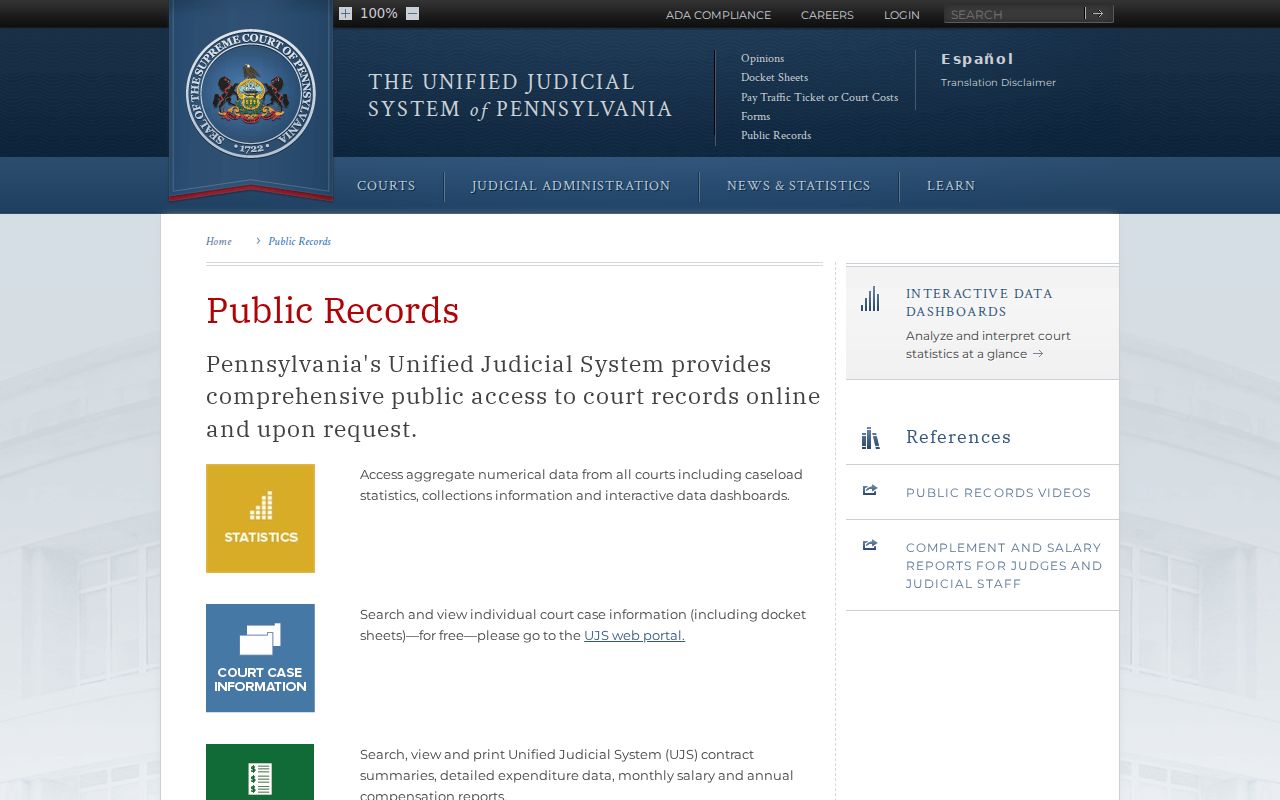
It keeps judicial access separate from an executive-agency open-record request.
Access & Restrictions
UJS public access excludes sealed, juvenile, confidential, and limited-access material. Full dates of birth, victim details, and other sensitive identifiers are limited. A sealed result may simply be absent, and a missing public case should not be treated as proof that an authorized agency has no record.
The Pennsylvania Right-to-Know Law does not convert court case files into county executive records. Request case papers from the clerk under court policy. Police investigative records stay with the police agency and may be withheld under separate law. A PSP PATCH certificate is also distinct because it reflects the Central Repository rather than the full Lehigh County file.
Access rule: Use UJS and the Criminal Division for judicial records; use the source police agency for reports; use PSP for repository history.
Federal Cases From Lehigh County
Federal criminal matters arising in Lehigh County belong to the U.S. District Court for the Eastern District of Pennsylvania. They do not appear as county Common Pleas cases. PACER requires an account and may charge for searches or page retrieval under its current schedule. Federal clerk public terminals provide another official route.
The Eastern District of Pennsylvania official court source is captured below.
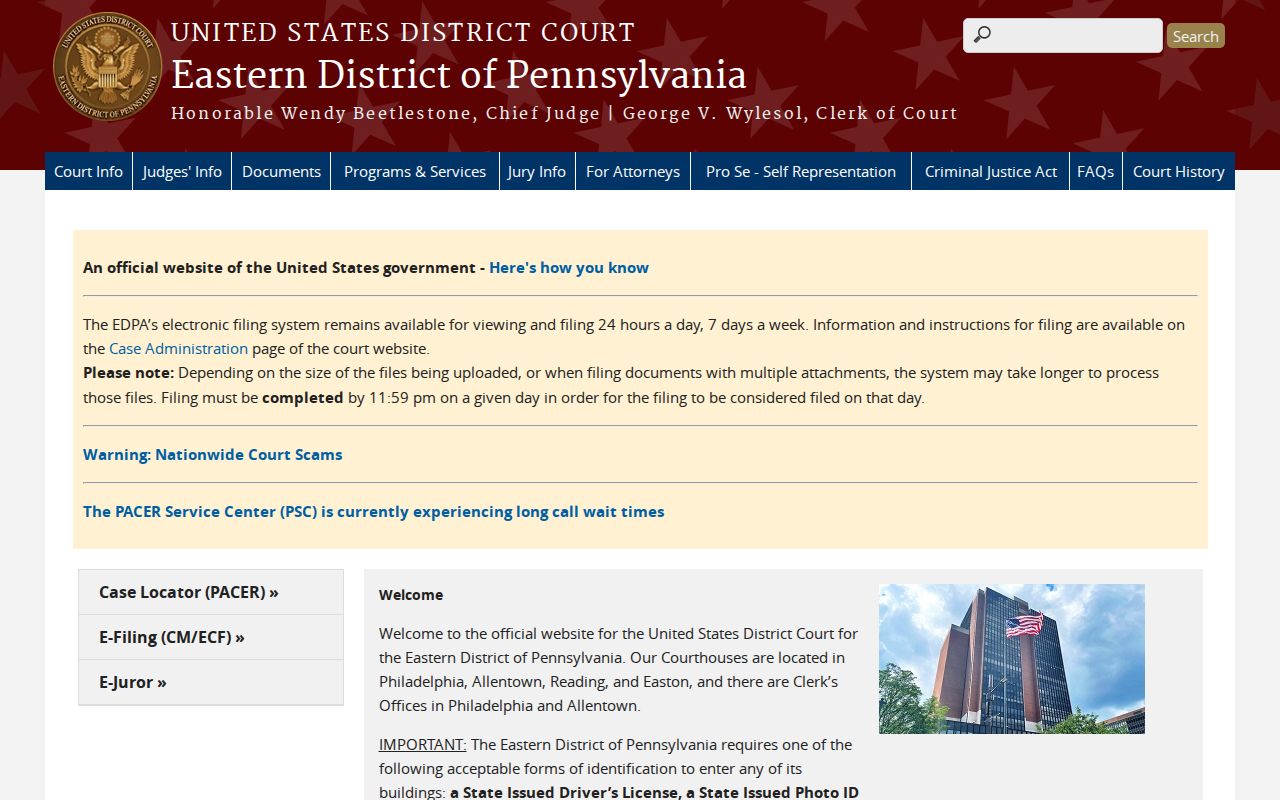
Its case files remain separate from Pennsylvania UJS and the Lehigh County Criminal Division.
The official PACER system is shown in this source capture.
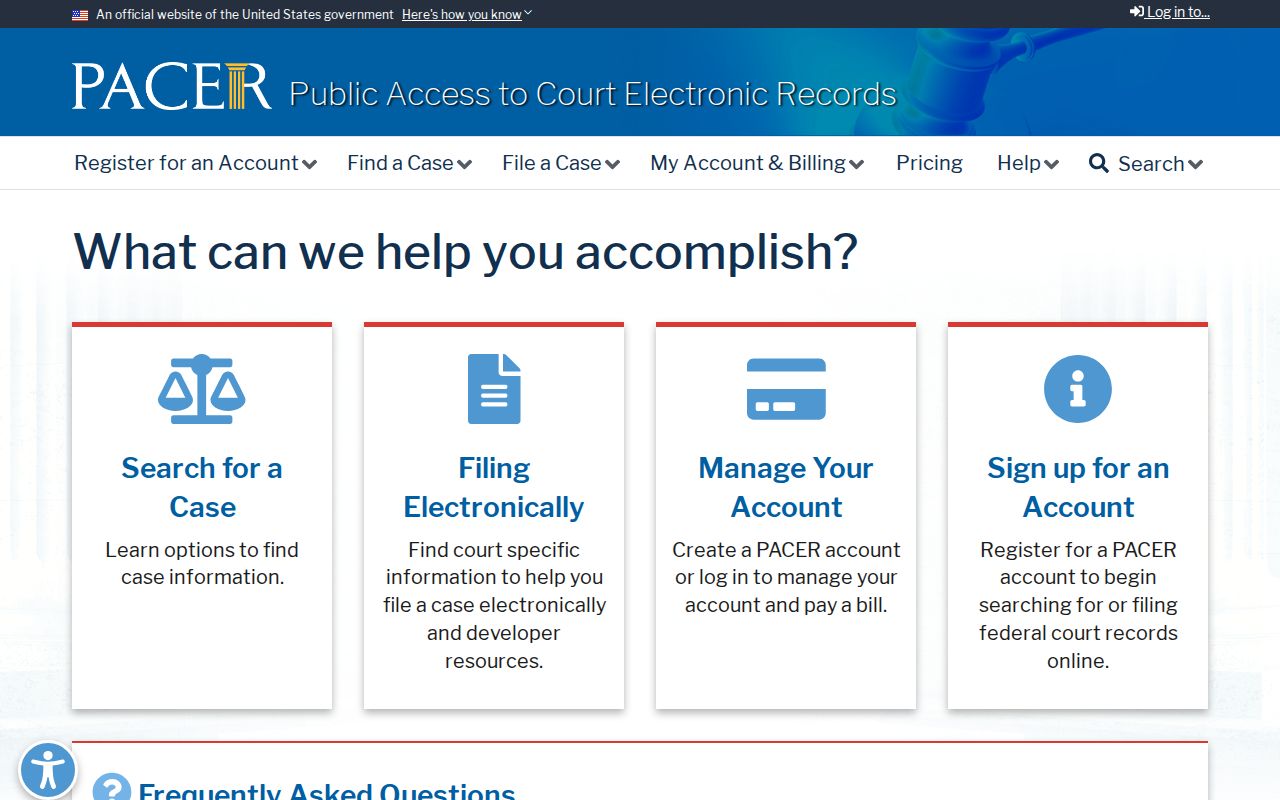
PACER dockets can show the judge, parties, filings, hearings, orders, judgments, and document links, while sealed material remains unavailable.