
How to Check Criminal History in Lehigh County
Start with the record that can answer the question. The free Unified Judicial System of Pennsylvania Web Portal Case Search is the best first stop for a filed Lehigh County court case. It covers Court of Common Pleas and Magisterial District Court dockets. The Clerk of Judicial Records Criminal Division supplies certified copies and public papers that do not appear as downloadable files. PATCH serves a different task: it searches the Pennsylvania State Police Central Repository for a statewide name-based certificate.
Gather a full legal name, spelling variants, the approximate filing date, and any OTN, docket, or police complaint number before searching. A common name alone can join the wrong person to a case. Use the county and court level shown on the docket, then compare charge dispositions and dates rather than relying on a result-list caption.
- Search UJS at both the Magisterial District and Common Pleas levels, selecting Lehigh County.
- Use an OTN, docket number, or police complaint number when one is known.
- Open the docket sheet and review the status, charges, disposition, bail, events, and sentence fields.
- Ask the Criminal Division for a certified or unavailable public document when the docket entry has no attached file.
- Use PATCH or subject-only Access and Review only when a Pennsylvania repository product is the needed record.
Lehigh County Records Along Hamilton
Downtown Allentown places several record offices close together, but their files do not merge. Allentown Police works from 425 Hamilton Street, City Hall stands at 435 Hamilton, and the Lehigh County Courthouse is at 455 W. Hamilton Street. The county Open Records Officer is nearby at 17 S. Seventh Street. A short walk can cross four legal record systems.
The courthouse holds criminal dockets and case papers. Allentown Police holds incident and investigative files. City Hall receives municipal Right-to-Know requests, while the county Law Department processes county requests. Lehigh County Jail at 38 N. Fourth Street keeps custody records. Choosing the office by record type prevents a police narrative request from landing at the clerk or a court-copy request from reaching the jail.
The same physical closeness can hide a second distinction. The Sheriff provides courthouse security, prisoner transport, service of process, and warrant execution, but it is not the clerk and does not operate Pennsylvania’s Central Repository. A warrant unit may confirm current operational facts. The issuing court remains the source for its docket, and PSP remains the source for a PATCH certificate. A request sent to the wrong office can produce a proper denial even when another office holds a public record.
Criminal Division
Lehigh County Courthouse
455 W. Hamilton Street
Allentown, PA 18101-1614
610-782-3000
County Open Records
Government Center, Room 440
17 S. Seventh Street
Allentown, PA 18101-2400
610-782-3180
Lehigh County Jail
38 N. Fourth Street
Allentown, PA 18102
Confirm direct access before visiting.
Official Pennsylvania Background Checks
The Pennsylvania State Police Bureau of Records and Identification runs Pennsylvania Access To Criminal History, known as PATCH. A standard Pennsylvania-only name check costs $22, and notarization adds $5. The result is not the full police report or court file. It reflects material that reached the Central Repository and may return quickly or enter manual review. “Under Review” means supplied identifiers may match and does not prove that a criminal record exists.
The official PSP criminal-history service page explains online and mail routes. The image below comes from that state service.
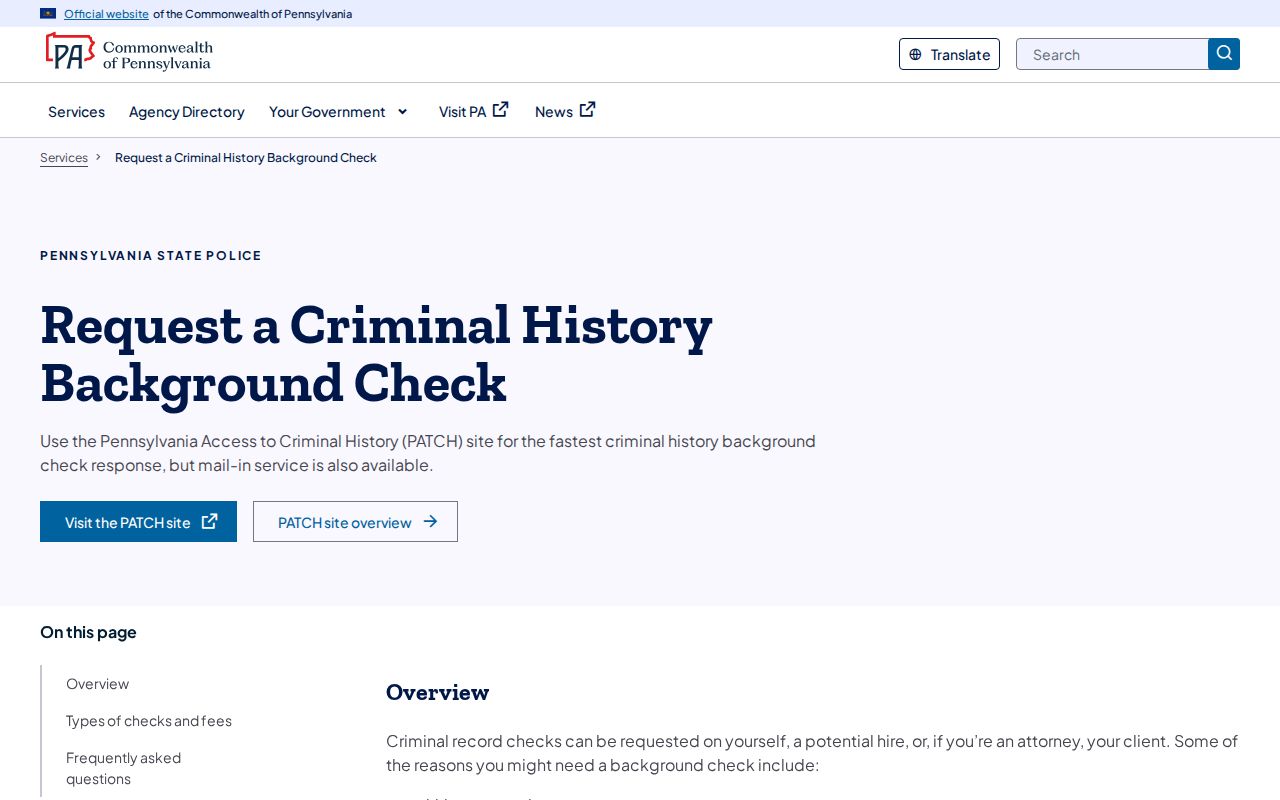
It places the statewide certificate with the agency that actually maintains Pennsylvania’s central criminal-history repository.
| Official product | Access | What it does |
|---|---|---|
| Standard PATCH | $22 online or mail | Public Pennsylvania name-based repository check |
| Notarized PATCH | $5 added | Adds notarization to the standard certificate |
| Individual Access and Review | $20, mail-only SP 4-170 | Lets the subject inspect convictions and nonconvictions held by PSP |
| IdentoGO | Program service code required | Captures fingerprints for an authorized Pennsylvania or FBI program |
PATCH Lehigh County Record Fields
PATCH asks for the subject’s first and last name and date of birth. Middle names, aliases, sex, and race can help narrow a possible match. The portal accepts major cards for paid checks and permits up to ten checks in a nonregistered session. A control number, subject name as entered, and request date are used later to validate or retrieve the certificate.
The PATCH transaction portal is shown in the captured source below.
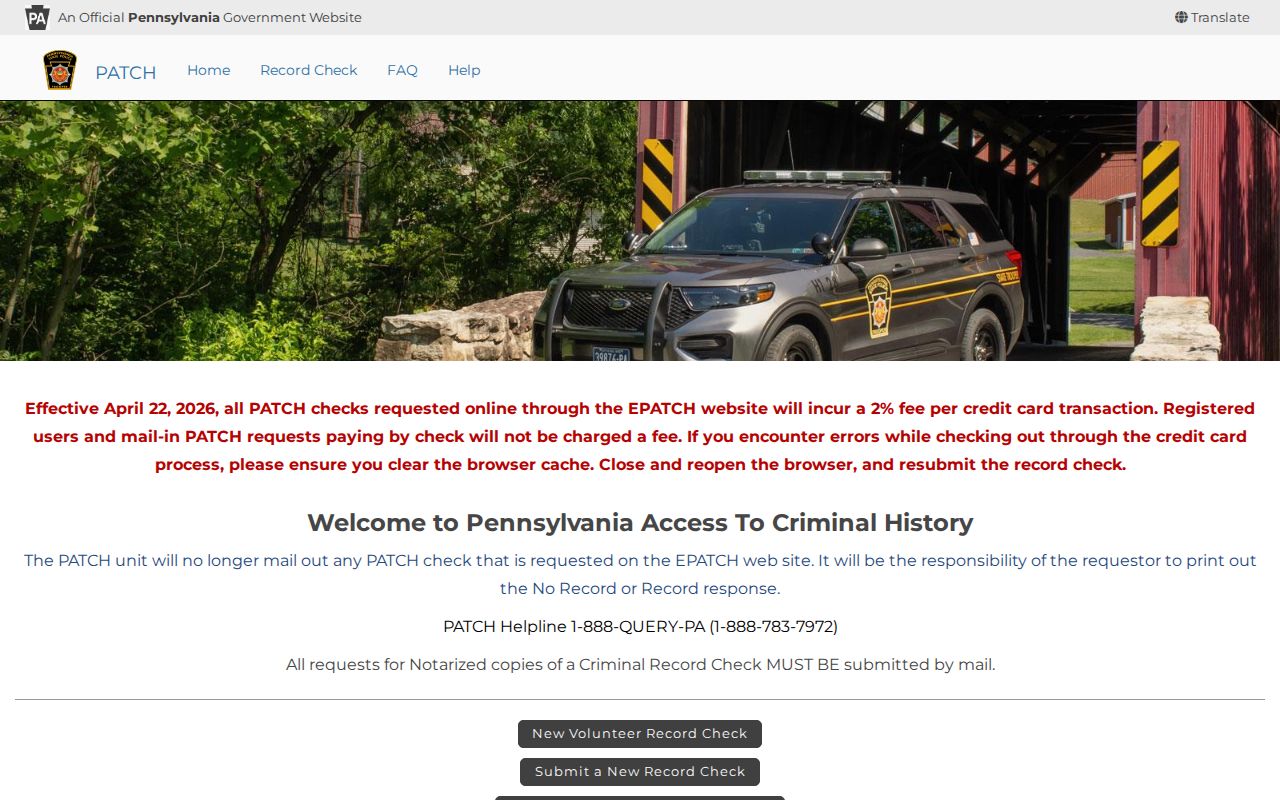
The interface belongs to PSP, so a certificate should be read as a repository result rather than as a complete Lehigh County court search.
Types of Criminal Records
Lehigh County criminal records are created at different points in a case. An incident report may contain a narrative, witness material, and evidence notes held by the police. An arrest and booking record documents custody and alleged charges. A Magisterial District docket follows the complaint and early hearings. A Common Pleas file tracks formal charges, motions, pleas, disposition, sentence, and costs. PSP then compiles reportable history under Pennsylvania law.
- Police report: the source-agency account, with investigative parts often restricted.
- Booking record: custody, charge, bail, housing, and release details held by corrections.
- Court docket: filed charges, hearings, disposition, sentence, and financial entries.
- PATCH history: the statewide PSP compilation, not a county file or narrative.
- Registry record: a separate public-safety publication under Megan’s Law.
- OTN
- The Offense Tracking Number that helps link a police complaint, court docket, and repository cycle.
- Disposition
- The recorded outcome of a charge, such as dismissal, withdrawal, plea, acquittal, or conviction.
- CHRI
- Criminal history record information as Pennsylvania law defines it, excluding intelligence and investigative information.
Pennsylvania grades offenses as felonies, misdemeanors, ungraded offenses, and summaries. A Lehigh County docket may show F1, F2, F3, M1, M2, M3, or another grade beside each count. General maximum terms range from up to one year for a third-degree misdemeanor to as much as 20 years for a first-degree felony. Those broad limits do not predict the Lehigh County sentence. The specific statute, plea, prior-record score, offense gravity score, enhancements, and judgment entry all matter. Use the grade as a reading aid, then check the statute and final Lehigh County court disposition.
Search Lehigh County Court Records
UJS Case Search publishes free docket sheets and calendars with no account. Choose Lehigh County and the correct court type. Search by docket number for the cleanest result. Participant name, organization, OTN, police incident or complaint number, and SID are alternate routes. Filing-date limits can keep a broad name search manageable. Sealed and limited-access matters do not appear in the public results.
The official Pennsylvania court case search supplies the captured interface below.
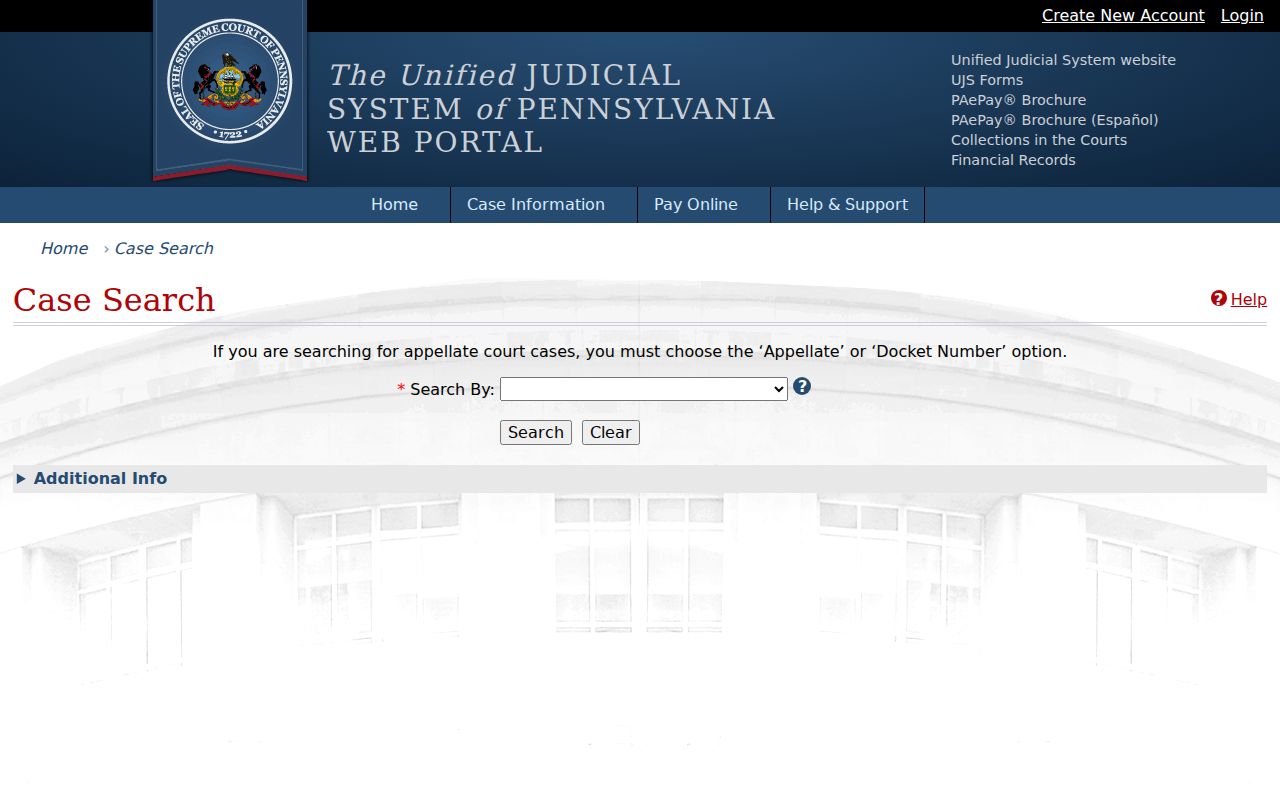
Use its county and court fields to avoid confusing a Magisterial District case with a later Common Pleas docket.
| Search field | Best use | Check closely |
|---|---|---|
| Docket number | Known court case | Correct MDJ or CP format |
| Participant name | Unknown case number | Middle name, date, and county |
| OTN | Following one arrest cycle | Related dockets and court level |
| Police complaint number | Matching police papers | Agency number format |
| Filed date | Narrowing many results | Initiation date may differ from arrest |
What a Lehigh County Criminal Record Shows
A public docket may display the court, county, docket number, case status, filing date, judge, and originating Magisterial District Court. Charge rows can show each count, statute, grade, disposition, and disposition date. Bail, scheduled events, filed motions, orders, fines, costs, restitution, payment activity, and sentence components can appear when entered. A docket entry does not guarantee that its underlying paper is available online.
| Name and Identifiers | Displayed participant name, OTN, complaint number, and related docket references when public. |
|---|---|
| Charges | Count, statute, subsection, description, grade, and later outcome. |
| Bail | Type, amount or percentage, status, posting, conditions, and forfeiture events when public. |
| Case Events | Arraignments, hearings, continuances, pleas, trial, disposition, and sentencing. |
| Financial Record | Fines, costs, restitution assessments, adjustments, paid amount, and balance. |
| Sentence | Confinement, probation, intermediate punishment, and consecutive or concurrent detail as entered. |
Lehigh County Jail Record Fallback
No verified public searchable Lehigh County inmate roster was found in the official county sources. That absence matters. For current county custody, contact Lehigh County Jail or Corrections, then use the UJS docket to check filed charges and bail. A targeted county record request can seek an existing booking record. The arresting agency remains the source for its incident report.
The PA DOC Inmate/Parolee Locator is not a county-jail substitute. It covers state-sentenced people and state-supervised parolees and updates daily. Federal custody belongs in the Bureau of Prisons locator. A missing result in either system says nothing certain about Lehigh County jail custody.
Record flow: Police arrest › central booking or jail custody › Magisterial District Court › Court of Common Pleas › PSP Central Repository.
Public Access Laws
Pennsylvania divides access by record type. The county’s official open-records policy applies the Right-to-Know Law to qualifying agency records, but it does not override juvenile confidentiality, sealed orders, victim protections, or the criminal-investigative exemption. Judicial case records follow court policy and clerk procedures. CHRIA controls criminal-history dissemination, and Act 22 supplies a separate process for police audio and video.
Key laws:
18 Pa.C.S. §§ 9102 and 9121 define criminal-history information and govern dissemination.
Pennsylvania Right-to-Know Law provides the general agency-record request and appeal system.
65 P.S. § 67.708(b)(16) protects criminal-investigative records from ordinary disclosure.
Act 22 of 2017 governs requests for law-enforcement recordings.
Lehigh County routes county requests through the Law Department in Room 440. The county has five business days to respond, deny, or invoke a lawful extension. Appeals involving criminal investigative records go to the District Attorney’s designated appeals officer rather than the ordinary Office of Open Records route.
The county RTKL form asks for the agency, submission date and method, requester identity, response channel, contact details, a specific description, and whether inspection, copies, or certification are sought. A strong request names the record type, date range, office, subject, and known docket, OTN, or incident number. RTKL requires access to existing records when the law allows; it does not require staff to research a question, assemble a new list, or reorganize agency data.
Police recordings follow Act 22 instead of the ordinary RTKL track. Active investigations, juvenile information, medical facts, victim-identifying material, and security-sensitive information can also be withheld or redacted. Court files must be requested from the clerk under judicial policy even though county funds support the courthouse.
Resolve Lehigh County Warrant Records
No open public Lehigh County warrant database was verified. A UJS docket may show that a bench warrant was issued or lifted, but secure statewide warrant services are restricted to approved users. A docket notation can also lag operational facts. The court that issued the warrant or the agency serving it must confirm current status.
For a possible warrant in one’s own name, contact the issuing Magisterial District Court or Common Pleas Criminal Division and seek legal advice before appearing. The Sheriff executes warrants, while Allentown Police maintains a Warrant Unit. An ordinary email or broad records request is not a safe emergency-confirmation method.
Note: Historical warrant records may be requested, but active investigative or safety-sensitive details can be withheld under Pennsylvania law.
Sealed, Expunged & Restricted
Expungement and limited access are not the same. An expungement order can remove qualifying information under 18 Pa.C.S. § 9122, while Clean Slate and other limited-access orders restrict public dissemination but preserve authorized justice access. Eligibility depends on the case outcome, offense grade, prior record, time, and completion of the sentence. Juvenile records follow separate rules.
A Lehigh County self-audit starts by locating every docket and OTN in UJS, then ordering a subject-only PSP Access and Review when repository accuracy matters. Approved Pennsylvania petition and order forms go to the Criminal Division, with notice to the District Attorney where required. The 2026 Lehigh County schedule lists $263.75 for adult expungement and $119 for juvenile expungement. A signed order still needs processing by the courts and PSP.
The official PATCH overview distinguishes a public certificate from subject-only Access and Review.
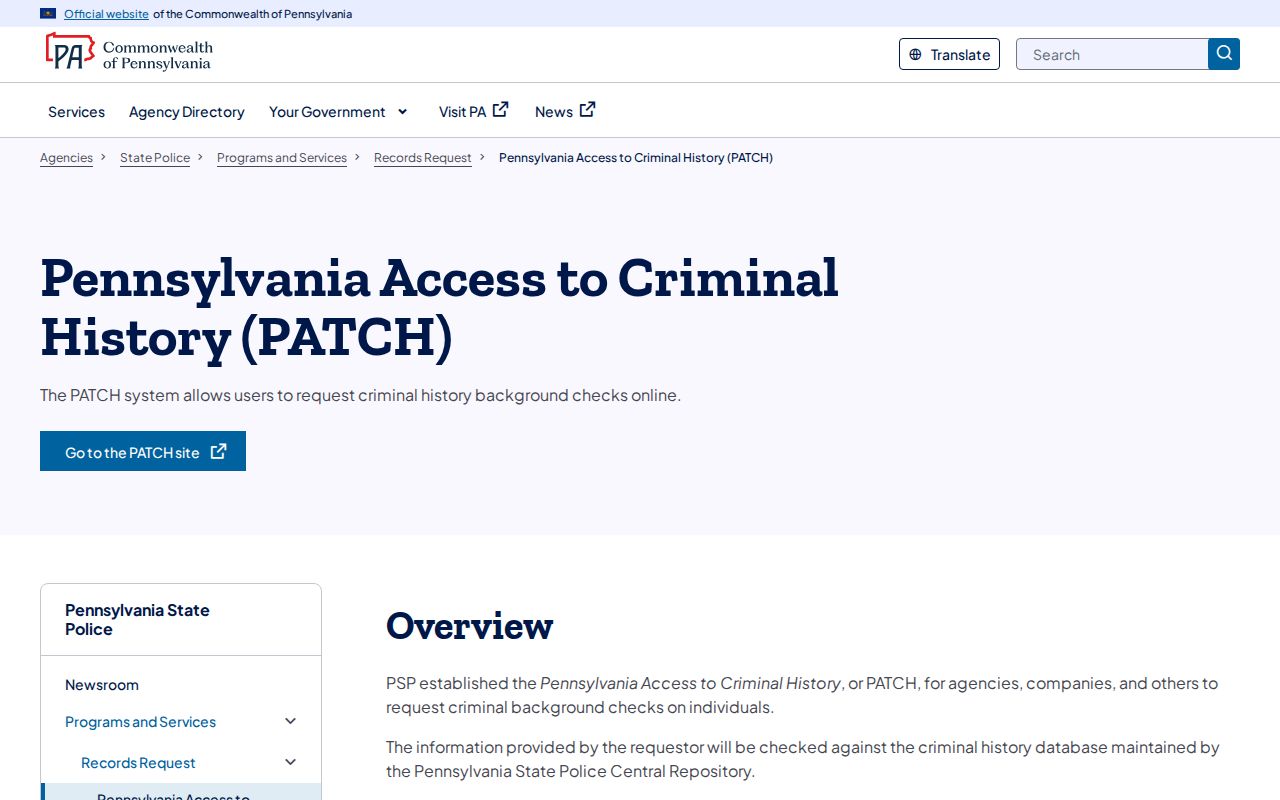
That distinction is vital when correcting a missing disposition or preparing a Lehigh County expungement filing.
Lehigh County Fingerprint Record Route
IdentoGO by IDEMIA is Pennsylvania’s contracted electronic fingerprint channel for programs that require an FBI fingerprint submission. The responsible state program supplies a service code before enrollment. Entering the wrong code can route the transaction to the wrong purpose, so the code should come from the official agency instructions.
The IdentoGO enrollment portal provides the source view below.
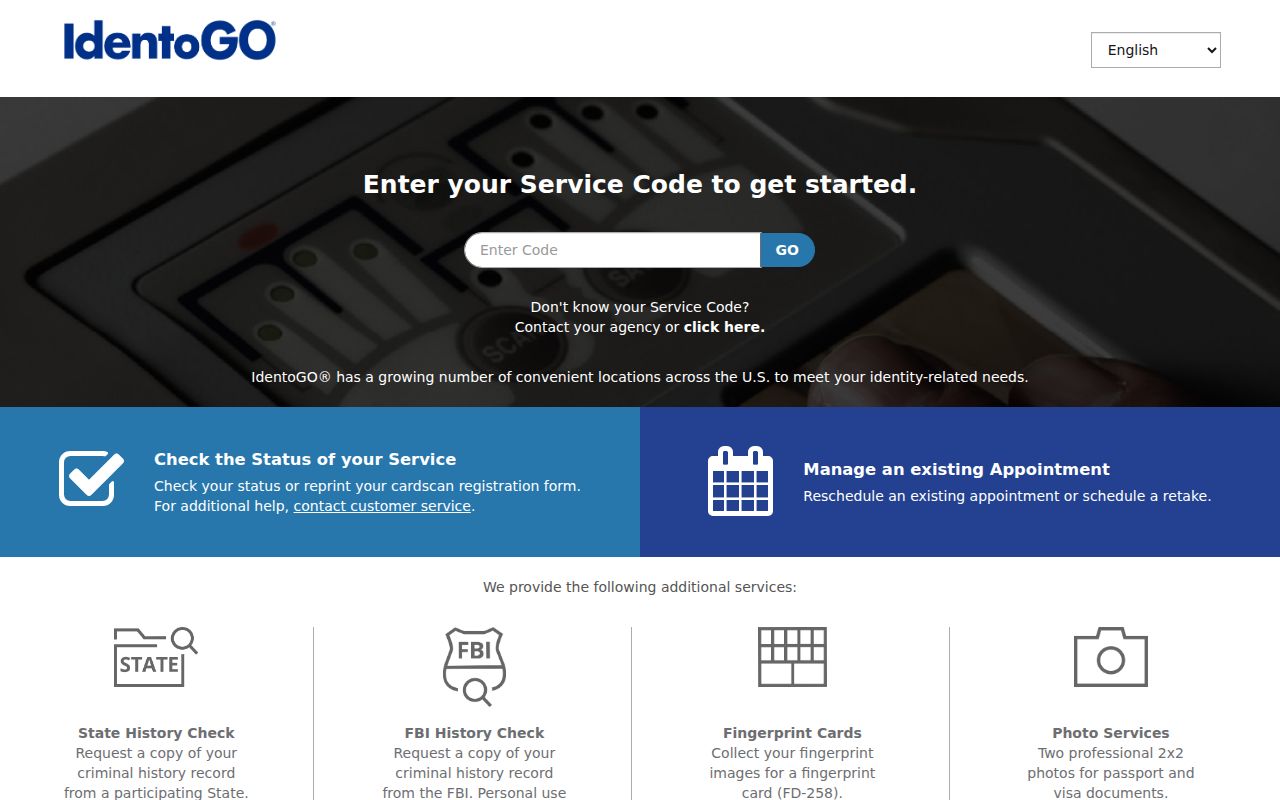
Locations and appointment times change inside the scheduler; confirm them there rather than relying on an old Lehigh County storefront listing.
A person requesting their own federal Identity History Summary can use the FBI instructions and the official electronic request portal. That subject-only federal product differs from both a Pennsylvania PATCH certificate and a Lehigh County docket search.
Lehigh County Supervision Records
Lehigh County Adult Probation and Parole supervises county probation and county parole. The Pennsylvania Parole Board makes state parole decisions, while PA DOC handles state parole supervision. A Common Pleas docket may show a probation sentence or revocation event, but it will not publish the complete supervision plan.
Contact the county office through the court directory for one’s own reporting instructions or official verification. PA DOC’s locator may show a state parolee but not a person on county probation. Treatment, medical, risk, and investigative information in a supervision file can remain restricted.
A supervision entry on UJS may identify probation, county intermediate punishment, or a revocation event without revealing every condition. PA SAVIN can provide custody-status notifications across county jail, state prison, and state parole settings, but it is a notice service rather than a public supervision file. When Lehigh County status affects a reporting duty, direct confirmation from the assigned county or state office is essential.
Criminal Records by City in Lehigh County
Municipal police agencies keep their own source reports even when a case later moves through Lehigh County courts. Allentown supplies a detailed records counter and incident dashboard. Bethlehem requires special care because the city crosses into Northampton County. Emmaus publishes official police activity releases and uses a local report-request form. Each city route adds facts that a statewide certificate or county docket may not contain.
Local source records give each Lehigh County search its needed city context.
Allentown Criminal History
County-seat police records, incident data, city RTKL channels, and Lehigh court routing.
Bethlehem Criminal History
A two-county city where the OTN and docket county control the correct route.
Emmaus Criminal History
Borough police releases, report fees, request fields, and Magisterial District dockets.